What Happens When Everyone Can Do What You Do?
AI is making the work cheaper. What happens to the business built around it?
 Stu Jordan · 17 September 2026 · 3 min read
If a job used to take you five hours and AI helps you finish it in 20 minutes, what do you charge?
The client gets the same result. It solves the same problem. You may even deliver something better.
Do you charge for 20 minutes? Keep the original fee? Does the customer need to know how much easier the work has become?
If you bill by the hour, becoming dramatically faster creates an obvious problem for your income. If you charge a fixed fee, you have more room. You agreed on a price for the finished job, and finding a better way to deliver it can improve your margin.
So far, a very good day.
But what happens when everyone else learns how to do it in 20 minutes too, including people who couldn’t do it at all six months ago?
The same capability that gives you more capacity gives other people a way into your market.
Work that once required specialist skills, expensive equipment or a small team becomes something far more people can offer. Existing businesses can take on more clients. New businesses appear, some charging less to win their first customers.
The value of solving your client’s problem may be unchanged. But as more people compete to solve it, the price they can charge comes under pressure.
That’s the complication with “charge for the value.” The customer can value the result enormously and still choose someone who delivers it for less.
Does all of this lead to a race to zero?
For some routine work, I think prices could get very close. Particularly where the result is easy to reproduce and good enough for what the customer needs. Experience and responsibility still matter, but they won’t protect every task we currently charge for.
There’s another force at work, though. Cheaper work allows people to do things they would never previously have considered.
Photography gives us a useful way to think about this.
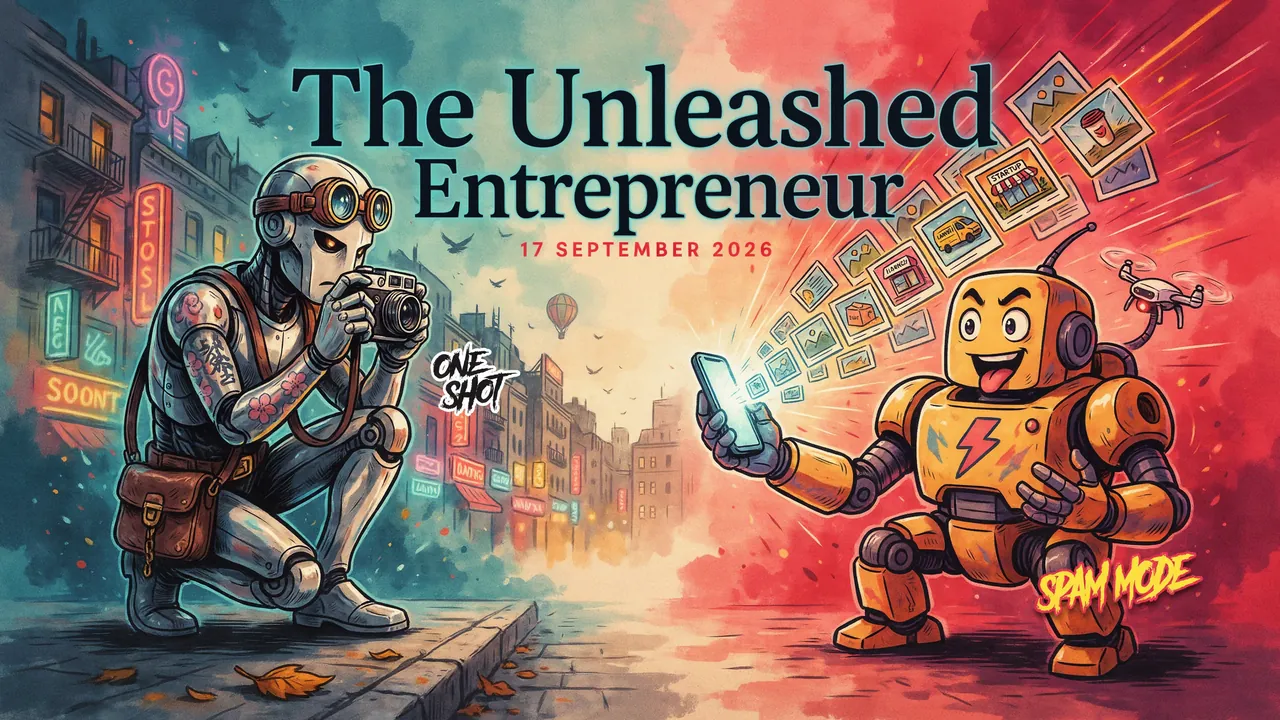
When every photograph used film and cost money to develop, we were selective. You had a limited number of shots, and you thought about whether something was worth taking a picture of.
Digital photography changed that calculation.
Now we photograph where we parked, a receipt, something funny the dog is doing. We take 20 pictures to get one we like and delete the rest without a thought.
We didn’t simply carry on taking the same photographs more cheaply. Our behaviour changed because the old limits disappeared.
We’re starting to see this with websites. When each one meant paying someone and committing time to the project, you were selective about what deserved its own site.
Now you can try a site for an idea, another for an event, a few different versions of an offer. Something that once needed a budget and a serious decision becomes something you can experiment with and throw away if it doesn’t work.
That could mean far more websites being created. But if you build websites for a living, it doesn’t necessarily mean more people paying you to build them.
The demand for the thing you produce can grow while demand for your service falls.
And that’s where this gets interesting. Your business could depend on customers needing help with a difficulty that is beginning to disappear. As that happens, what they need from you changes, and the service you offer may have to change with it.
I think this is where we’ll see some of the biggest shifts in business models.
A lot of our businesses were built around work taking time, expertise being difficult to acquire and growth requiring more people. Those constraints shaped what we sold, how we delivered it and who could afford to buy.
Agents are beginning to change those calculations. One person can keep several pieces of work moving in parallel. An intelligence layer that understands the business can carry more of the coordination and knowledge that previously depended on the owner.
That opens possibilities for the service provider and the customer at the same time. Both can do more, and both will start making decisions that wouldn’t have made sense before.
I’m excited by that. But I also think we need to look beyond the immediate pleasure of getting five hours of work done before our coffee goes cold.
You could become 10 times more productive at work your customers are learning to do without you.
The business you’ve made more efficient may need to become a different business altogether.
~ Stu